Posts

Pricing Seminar with Prof. Riekhof on 20/21.02.2025 in Hamburg

When it comes to their pricing policy, many companies still act relatively unsystematically, in fact a well-thought-out sustainable pricing strategy is often lacking. This is evidenced by our regular empirical pricing studies. The daily handling of pricing processes, not least intensified by current economic developments such as inflation, supply bottlenecks and increased procurement costs, is often perceived as very complex and often leads to a lack of consistency.

When applied correctly, the marketing tool Pricing has considerable potential for sustainable value creation. How to simplify pricing and optimally align it strategically, is conveyed by the renowned pricing expert Professor Dr. Hans-Christian Riekhof in this practice-oriented two-day intensive seminar. Practical, clear and easy to understand, he provides a solid methodological framework and thus helps companies to increase their pricing competence.

In addition to theory, practice also plays a major role in the intensive pricing seminar, with Professor Riekhof addressing specific questions from the seminar participants’ everyday work. Participants are therefore advised to bring their own company-specific topics.

The seminar on 20/21. February 2025 in Hamburg is aimed at executives and specialists in marketing and sales who are confronted with pricing questions in their daily work and who are looking for a pragmatic way to embed price decisions in a long-term pricing strategy and thus increase value creation.

Anyone who wants to participate should hurry. There are currently only a few places left.

Read the impressions of previous seminar participants here
https://www.unicconsult.com/pricing-seminar/teilnehmerstimmen/

More information at
www.unicconsult.com/pricing-seminar


Increased food prices – who actually profits from it?

Since 2020, food in Germany has become about a third more expensive. Shopping for everyday products in supermarkets has become significantly more costly. This is evidenced by an analysis of the Handelsblatt Research Institute, which evaluated the balance sheets of 70 medium-sized and large brand manufacturers as well as the leading retail corporations in Europe. It also became clear who benefits from higher prices – and who loses.

The Handelsblatt thoroughly examined the consequences of inflation on September 16, 2024. In 2023 alone, the prices for food and non-alcoholic beverages increased by 12.4 percent according to the Federal Statistical Office – significantly stronger than general inflation. The newspaper stated on the basis of its own analysis that not only the manufacturers, but also the retailers make profits. “Manufacturers and retailers have been accusing each other for years of driving up prices to increase their profits”, the newspaper writes. In fact, both benefited equally.

Increased food prices: The winners are primarily the large producers and retail chains

This applies primarily to corporations in terms of producers – globally active brand manufacturers such as Nestlé (Kitkat), Unilever (Dove) or AB Inbev (Beck’s) and Coca Cola. The large European retail chains, including Rewe and Metro from Germany, Tesco from the UK and Carrefour from France, made profits to a similar extent, according to the report.

The losers in this price increase, which set in around the start of the Corona pandemic, are the consumers who have to dig deeper into their pockets. Prof. Dr. Hans-Christian Riekhof evaluates the development from the perspective of the pricing expert: “It is remarkable that both the manufacturers and the retailers were able to use the phase of stronger inflation equally to increase their profits. This can be seen as an indication that both sides master the process of pricing quite well – but at the expense of the consumer.”

Pricing expert Riekhof: Both sides have understood the process of pricing – at the expense of consumers

In addition to consumers, however, another major loser comes into focus: medium-sized companies, producers with less than one billion euros in sales, for example Frosta and Weleda. This is also noticeable in the increasing number of insolvencies of consumer goods companies. According to the Handelsblatt report, they cannot afford to fight tough price wars with the large retail chains, especially not over a longer period of time. Many medium-sized consumer goods manufacturers would have a weaker position in negotiations with domestic trade because they often generate a large part of their revenues in Germany and are therefore more dependent on the four large supermarket chains Aldi, Lidl, Edeka and Rewe.

Increased food prices: Medium-sized companies place less emphasis on the professionalization of pricing

“The study by the Handelsblatt Research Institute makes it clear that medium-sized manufacturers lack market power on the one hand”, says Riekhof. “On the other hand, they probably also lack pricing competence. At least that’s what our own empirical studies show: medium-sized companies place less emphasis on the professionalization of pricing.”

If the market continues to consolidate, and that’s where it’s heading, corporations will become more powerful, a consumer goods manufacturer is quoted. And that’s not good news for retailers either. If the middle class bleeds out in the long run, the trade loses the versatility of its range.

Charging Station Queues for Electric Cars: Control Demand through Pricing Mechanism?

Long waiting times at charging stations for electric cars? The Handelsblatt reported on this on 02.09.2024. In the summer, many people who were on the road on Germany’s motorways experienced the annoyance of occupied fast chargers. At the same time, there is talk of overcapacity of charging stations in Germany. How does this fit together, Catania Krapp from Handelsblatt asked in her article titled “Why do electric car holidaymakers often wait for free fast chargers?”

Charging station provider Ionity: Demand lags behind

Torsten Kiedel, CFO at the fast charging station provider Ionity, contradicts in the report the accusation that the charging station utilization is too high and explains that the demand is currently rather lagging behind the expansion. Regardless of the expansion: the ratio ’15 electric cars to one charging point’ remains the same.

Charging stations for electric cars: it gets full at the beginning and end of the holidays, but also on Fridays and Sundays

For many holidaymakers, such queues would have meant hanging around in the car next to the fast chargers until someone else has finished charging, also to make sure that no other waiting driver pushes in, the newspaper writes. A charging stop of 20 minutes could thus already take twice as long. The report quotes Peter Wüstnienhaus, an expert on electromobility for many years. Especially at the beginning and end of the holidays, but also generally on Fridays and Sundays, the risk is high that the charging stations will be full, he says. He has already experienced having to wait at the A1 on Sunday evenings at 10 p.m. because all four charging points were occupied.

Pricing expert Prof. Riekhof: Control demand at charging stations through pricing mechanism

With regard to the defined goal that the number of electric cars should increase from currently 1.5 million to 15 million by 2030, the Handelsblatt asks whether the charging station infrastructure is prepared for this and how electric car drivers can avoid queues.

Prof. Dr. Hans-Christian Riekhof (UNICconsult Strategy Development) believes that the most important topic is not addressed in this exciting report, namely how demand can be controlled. His answer: through a pricing mechanism. “Do electric car drivers know the price difference between providers and the gap between fuel costs and the cost of electricity per 100 kilometers?”, asks the pricing specialist. “Do providers rely on Peek Load Pricing? Do prices change during the day, during the week or according to the seasons?” Unfortunately, you don’t find out about this. At least that’s how the oil companies do it. “It would be interesting to make a comparison here”, says Riekhof.

Photo: © Joenomias/pixabay.de

06.02.2025 | Hamburg – education & coffee: Strategic Pricing – Should you simplify your pricing to finally get a handle on complexity?

Many companies are now asking themselves whether the internal pricing processes have become so complex that it would be advisable to fundamentally simplify the discount structures, the numerous net prices stored in the system and the customer-specific conditions.

This is the topic of Professor Riekhof’s lecture on February 6, 2024, who has been dealing with the topic of strategic and operational pricing for many years and has conducted numerous empirical studies on this. There will be surprising answers to the complexity of pricing at one point or another. And the handling of price reductions – especially in a sales crisis – will also be highlighted by the pricing expert.

Where:
Business Club Hamburg
Elbchaussee 43
22765 Hamburg

When:
Thursday, February 6, 2025
09:00 – 11:00 AM

Cost: With your binding registration, a contribution of 24.00 euros per person is associated. This includes a business breakfast, water and all hot drinks.

Registration at:
https://www.bch.de/veranstaltungen/business-fruehstueckstrategisches-pricing-sollten-sie-ihr-pricing-vereinfachen-um-die-komplexitaet-endlich-in-den-griff-zu-bekommen/

You can subscribe to his pricing newsletter here:
https://www.unicconsult.com/pricing-newsletter/

03.04.2024 | Bremen – What comes after Inflation Pricing? On the skillful handling of price reductions.

After the high and very high price increases, triggered by the consequences of the Corona pandemic, Ukraine war with supply chain problems and inflation, many companies are confronted with massive demands for price reductions. How should companies react or act here?

Trade and manufacturers are currently in tough disputes over whether prices must fall again in 2024 or whether there are justifications for further price increases. This is also the topic of the lecture by Prof. Dr. Hans-Christian Riekhof at the Bremen Chamber of Commerce on 06.04.2024.

In the negotiations, a clear pricing strategy, but also a good negotiation strategy, is important. Is your sales team prepared for this? Do you need to spend more energy on strategic pricing? Pricing expert Riekhof (Unicconsult Strategy Development) explains the backgrounds and strategies in his practical lecture and gives helpful tips and suggestions. At the same time, he presents the latest pricing study (Pricing Process in Business Practice – Riehof/Breustedt 2023), which specifically addresses the topic of Inflation Pricing.

The Bremen Chamber of Commerce and Prof. Dr. Riekhof cordially invite you to this free lecture.

Here is the link to the event:
Mittelstandstreff “What comes after Inflation Pricing? On the skillful handling of price reductions” – Bremen Chamber of Commerce – IHK for Bremen and Bremerhaven

Date:
03.04.2024

Time:
12:30 PM

Duration:
approx. 90 minutes

Location:
Bremen Chamber of Commerce – IHK for Bremen and Bremerhaven
Am Markt 13
28195 Bremen

Photo: Karolina Grabowska/pexels.de

Food Newspaper reports on Pricing Study 2023

Under the title “Pricing increases its importance”, the trade journal of the food industry extensively covers the current, now fifth edition of the empirical study of the Private University of Göttingen (PFH). After 2009, 2012, 2015 and 2018, pricing processes in business practice have been analyzed again in 2023. The study by pricing expert Professor Dr. Hans-Christian Riekhof and Lukas Breustedt shows that companies attach greater importance to strategic pricing and the topic has gained relevance compared to previous studies.

Particularly due to a series of challenges and resulting requirements, such as supply shortages and unusually high inflation rates, this development has been accelerated. However, not to the extent that the experts had expected. Given the requirements of inflation pricing, it was expected that the importance would increase much more, says Riekhof, one of the authors of the study. Only just under a quarter of all surveyed company representatives rated the relevance of strategic pricing as “very high”.

More about the study “Pricing processes in business practice 2023 – Riekhof/Breustedt”:
https://www.unicconsult.com/pricing-studie-2023-pfh-private-hochschule-goettingen-legt-neue-empirische-untersuchung-von-pricing-prozessen-in-unternehmen-vor/

Food Newspaper reports on PFH Pricing Study 2023

The Food Newspaper (LZ) picked up on the current pricing study of the PFH Private University of Göttingen in a post on June 13. Pricing expert Prof. Dr. Hans-Christian Riekhof and Lukas Breustedt had examined pricing processes in business practice in the spring of 2023 and interviewed companies from various industries.

The LZ headlines “Pricing is becoming more important” and explains that supply chain problems and inflation have led to pricing being more important for some companies today than it was a few years ago. Nevertheless, pricing is of very high importance for only about a quarter of the companies surveyed.

You can read the article in the Food Newspaper via the following link (paywall):
Company survey: Pricing is becoming more important

The complete Pricing Study 2023: Pricing processes in business practice:
https://www.unicconsult.com/referenz/pricing-studie-2023-pricing-prozesse-in-der-unternehmerischen-praxis/

Pricing Seminar on 22.06/23.06.2023 in Hamburg

Pricing is one of the most underestimated marketing tools. Therefore, the potential for sustainable value creation often remains largely unnoticed. Many companies still lack a long-term strategy to deal with the daily, sometimes complex challenges of the pricing process.

In this two-day, practice-oriented intensive seminar, pricing expert Professor Dr. Hans-Christian Riekhof provides a comprehensible, practical methodological framework for increasing the pricing competence of companies. Using four levers, not only is the theory conveyed, but these are also applied using practical examples from the participants’ everyday work. Therefore, participants from various industries are recommended to bring specific pricing issues from their own work area into the seminar to work on them there.

The seminar is aimed at executives and experts in marketing and sales who are confronted with pricing questions in everyday life and who are looking for a pragmatic way to embed price decisions in a long-term pricing strategy and thereby increase value creation.

Early registration is recommended as places are limited.

Read how previous participants rate the seminar
https://www.unicconsult.com/pricing-seminar/teilnehmerstimmen/

More information at: www.unicconsult.com/pricing-seminar

Marketing Magazine Horizont reports on Inflation-Pricing-Study

Under the title “Companies set prices in inflation across the board – No desire for price differentiation”, Horizont, one of the leading marketing magazines, refers to the recently published inflation-pricing study by the PFH Private University of Göttingen. Pricing expert Prof. Hans-Christian Riekhof and Julius Reutel examined in this empirical study in 2022 how companies implement price increases.

“Rising production costs, supply chain delays, ongoing chip shortages and not least the energy crisis are causing companies to drastically increase prices. According to a current study by the Private University of Göttingen on the subject of inflation, 60 percent of the companies surveyed plan to increase prices by at least 10 percent this year, and 30 percent of the companies even want to increase prices by 15 percent or more”, Horizont reproduces some results. “There is obviously a considerable need for action, among other things due to the raw material price situation”, Horizont quotes from the study.

Further links

Full article (paywall):
Companies set prices in inflation across the board

ESSO Discount Promotion: Fill up for EXACTLY 70 € – who comes up with such a thing?

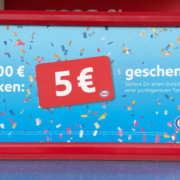
It is an old wisdom in pricing: many discount strategies are anything but well thought out – for example when Deutsche Bahn tries to dissuade me from buying a Flex-Ticket with a price advantage of 1.25 euros. A current example of a hardly comprehensible discount idea is the ESSO discount promotion: anyone who fills up for EXACTLY 70 euros receives a discount of 5 euros on the next refuelling.

What is actually being rewarded in this ESSO discount promotion? The customers’ play instinct? The sensitivity in handling the fuel pump? Should I refrain from filling up completely in order to be able to redeem the 5 euros? Will I become an ESSO regular customer as a result? How annoyed would I be if the tank is already full at 67 euros? And with our Toyota, we have never filled up for 70 euros, the little one doesn’t have such a huge tank. Am I being discriminated against because I don’t drive an SUV?

It seems to be true what pricing expert Hermann Simon said many years ago: very many discount systems are not really well thought out. This ESSO action apparently belongs to them.